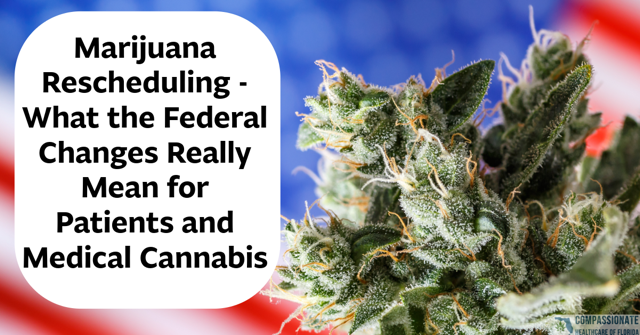
 Marijuana Rescheduling – What the Federal Changes Really Mean for Patients and Medical Cannabis
Marijuana policy in the United States is entering a new chapter. After decades of being classified as a Schedule I substance under federal law, marijuana is now on a formal path toward being rescheduled to Schedule III. While this change does not legalize cannabis at the federal level, it represents the most meaningful shift in federal cannabis policy to date — and it carries real implications for patients, healthcare providers, and the medical marijuana industry.
For years, federal law has conflicted with the reality on the ground. Most states now operate medical marijuana programs, many allow adult-use cannabis, and millions of patients rely on marijuana as part of their healthcare routine. Rescheduling does not suddenly change how patients access cannabis, but it does signal a major shift in how the federal government views marijuana as medicine.
What Does Marijuana Rescheduling Actually Mean?
Under the Controlled Substances Act, drugs are categorized into schedules based on their medical use and potential for abuse. Schedule I substances are considered to have no accepted medical use and a high potential for abuse. Marijuana has remained in this category since the 1970s, alongside drugs like heroin.
Moving marijuana to Schedule III acknowledges that cannabis does, in fact, have accepted medical use and a lower abuse potential than Schedule I substances. Schedule III drugs include medications such as ketamine and certain codeine-containing products — substances that are regulated but recognized as medically valuable.
This change does not legalize marijuana federally. Cannabis will still be illegal under federal law, and states will continue to control how medical and recreational programs operate. However, the shift carries symbolic and practical weight.
Why Rescheduling Is a Big Deal for Medical Cannabis
One of the most important aspects of rescheduling is what it represents: federal recognition that marijuana has legitimate medical value. This aligns federal policy more closely with the conclusions already reached by millions of patients, physicians, and state regulators.
For medical marijuana patients, this helps reduce stigma. Many patients still hesitate to explore cannabis as a treatment option because of outdated perceptions tied to federal classification. Rescheduling helps normalize cannabis as part of modern healthcare, especially for conditions like chronic pain, anxiety, cancer-related symptoms, and neurological disorders.
For physicians, rescheduling may encourage more open conversations with patients. While doctors will still follow state medical marijuana laws, the federal acknowledgment of medical use may make providers more comfortable discussing cannabis as part of a broader treatment plan.
Research Could Finally Catch Up to Reality
Perhaps the most significant long-term impact of rescheduling will be on scientific research. Schedule I status has severely limited cannabis research for decades, creating barriers that made it difficult to study marijuana’s benefits, risks, dosing, and long-term effects.
Rescheduling to Schedule III lowers many of those barriers. Researchers will have greater access to study cannabis and cannabinoids without navigating the extreme restrictions associated with Schedule I substances. This opens the door to better clinical data, more consistent treatment guidelines, and a clearer understanding of how cannabis interacts with the body.
Over time, improved research could lead to better patient outcomes, more standardized dosing recommendations, and potentially FDA-approved cannabis-based medications.
What This Means for the Cannabis Industry
From a business standpoint, rescheduling is likely to have its biggest impact through tax reform. Currently, cannabis businesses are subject to a federal tax rule known as 280E, which prevents companies dealing in Schedule I substances from deducting normal business expenses like rent, payroll, and marketing.
If marijuana is moved to Schedule III, 280E would no longer apply. This would significantly reduce tax burdens for dispensaries, cultivators, and manufacturers. Lower operating costs could lead to more sustainable businesses, increased competition, and potentially lower prices for patients over time.
That said, rescheduling does not automatically solve banking challenges or interstate commerce issues. Cannabis businesses will still operate in a complex regulatory environment, but the financial outlook becomes more stable.
What Rescheduling Does Not Change
It’s important to clear up common misconceptions.
Rescheduling does not:
- Legalize marijuana nationwide
- Eliminate the need for state medical marijuana cards
- Allow cannabis to be sold across state lines
- Replace state-run medical marijuana programs
- Automatically permit insurance coverage for cannabis
Patients will still need to follow state-specific rules. In Florida, for example, patients will still require a valid medical marijuana card, physician certification, and active orders in the state registry. Dispensary limits, renewal timelines, and doctor evaluations all remain in place.
In short, nothing changes overnight for patients at the dispensary counter.
How Soon Will This Take Effect?
Although the direction is clear, rescheduling is not instantaneous. Federal agencies must complete a formal rulemaking process that includes scientific review, administrative steps, and public comment periods. This process can take months and, in some cases, longer.
Even once rescheduling is finalized, the effects will roll out gradually. Businesses will adjust tax strategies, researchers will pursue new studies, and regulators will issue additional guidance. This is a shift measured in years, not weeks.
What Patients Should Expect Moving Forward
For patients, the immediate impact is mostly educational and symbolic. Rescheduling reinforces the legitimacy of medical cannabis and supports continued growth of state medical programs. Over time, patients may benefit from:
- Improved research-backed treatment guidance
- More physician participation in medical cannabis programs
- Potential pricing stabilization as the industry matures
However, patients should remain cautious about misinformation. Rescheduling does not remove the need for medical oversight, and it does not guarantee recreational legalization in every state.
What Marijuana Rescheduling Means Specifically for Florida Patients
For Florida patients, marijuana rescheduling at the federal level will not change how medical marijuana access works in the state — at least not in the short term. Florida’s medical marijuana program is governed entirely by state law, and those rules remain firmly in place regardless of federal scheduling changes.
Patients in Florida will still need:
- A valid Florida medical marijuana card
- An evaluation and certification from a qualified physician
- Active orders in the Medical Marijuana Use Registry
- Regular renewals every 7 months to maintain purchasing access
Rescheduling does not remove any of these requirements, nor does it allow patients to purchase marijuana without a doctor’s involvement. Dispensary limits, product availability, and registry rules all continue exactly as before.
Where rescheduling does matter for Florida is in perception and momentum. Florida has one of the largest medical marijuana patient populations in the country, and federal recognition of marijuana’s medical use further legitimizes the program. This may encourage more patients — especially older adults and those who were previously hesitant — to explore medical cannabis under proper medical supervision.
It may also impact how Florida policymakers approach future legislation. While rescheduling alone does not legalize adult-use cannabis, it increases the likelihood that Florida voters will continue to see ballot initiatives related to marijuana access. If recreational use is eventually approved in Florida, the structure of the medical program will become especially important.
In states that have already transitioned to adult-use cannabis, medical programs typically remain in place because they offer meaningful advantages. These often include tax savings, higher purchase limits, stronger dosing options, and ongoing physician oversight. Florida is likely to follow a similar path if adult-use legalization ever occurs.
For now, Florida patients should view rescheduling as a positive but indirect development. It strengthens the medical foundation of cannabis without disrupting access, renewals, or existing protections. Patients who stay compliant with state requirements and maintain regular follow-ups with their medical marijuana physician will remain well positioned regardless of future policy changes.
The Bigger Picture: A Step, Not the Finish Line
Rescheduling marijuana is best understood as a major step forward — but not the final destination. It reflects changing attitudes at the federal level and lays the groundwork for future reforms, whether that means broader legalization, expanded research, or new regulatory frameworks.
For now, medical marijuana programs remain essential. They provide structure, patient protections, physician oversight, and access to regulated products. Even in states that later adopt adult-use cannabis, medical programs often continue to exist because they offer benefits like tax savings, higher purchase limits, and stronger patient protections.
Final Thoughts
Marijuana rescheduling marks a historic shift in federal cannabis policy. It validates what patients and healthcare providers have known for years: cannabis has real medical value. While it does not legalize marijuana or radically change access overnight, it moves the conversation forward in a meaningful way.
For patients, doctors, and medical cannabis clinics, rescheduling reinforces the importance of staying informed, compliant, and engaged as the regulatory landscape continues to evolve. The road ahead will take time, but this change signals progress — and progress matters.